
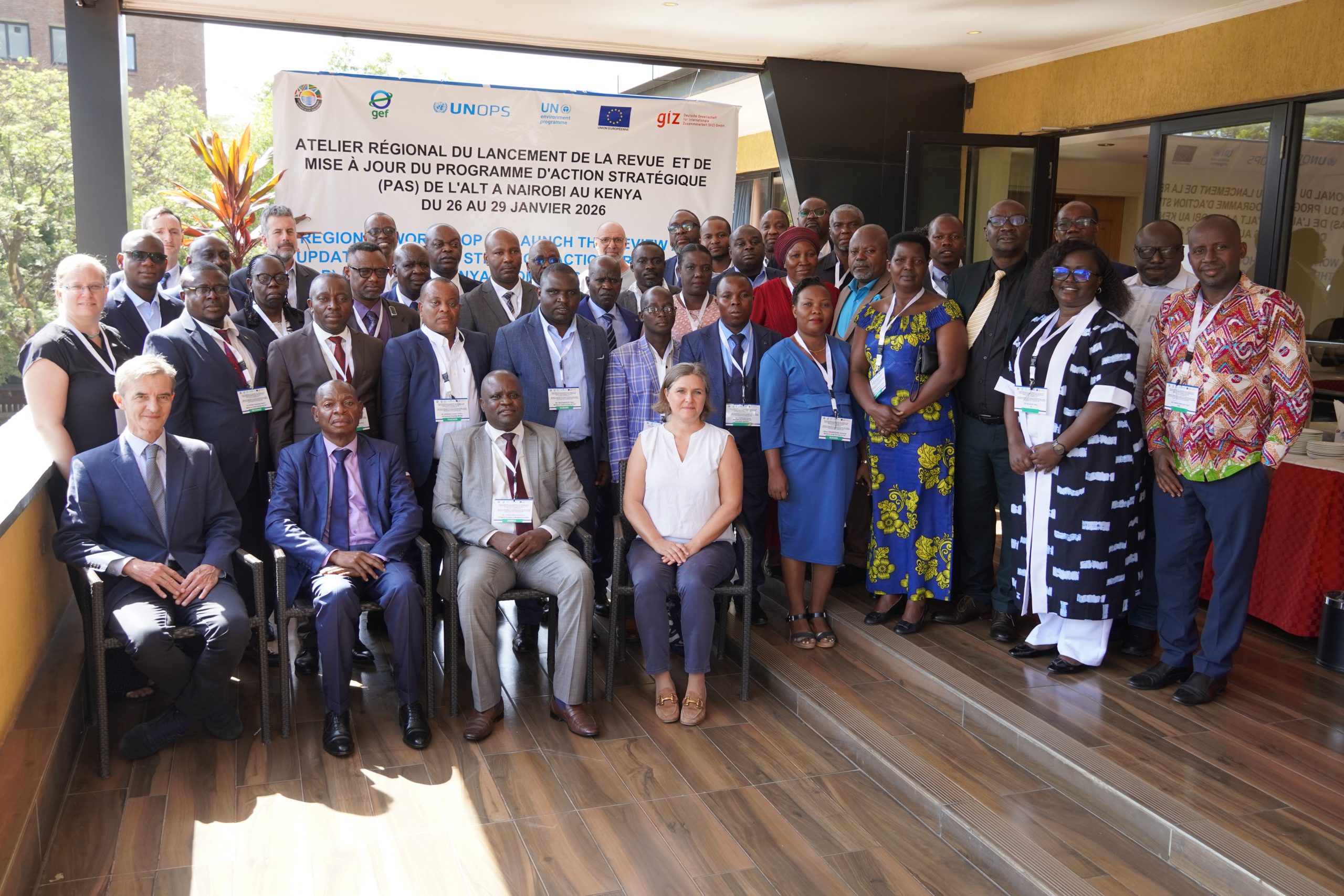
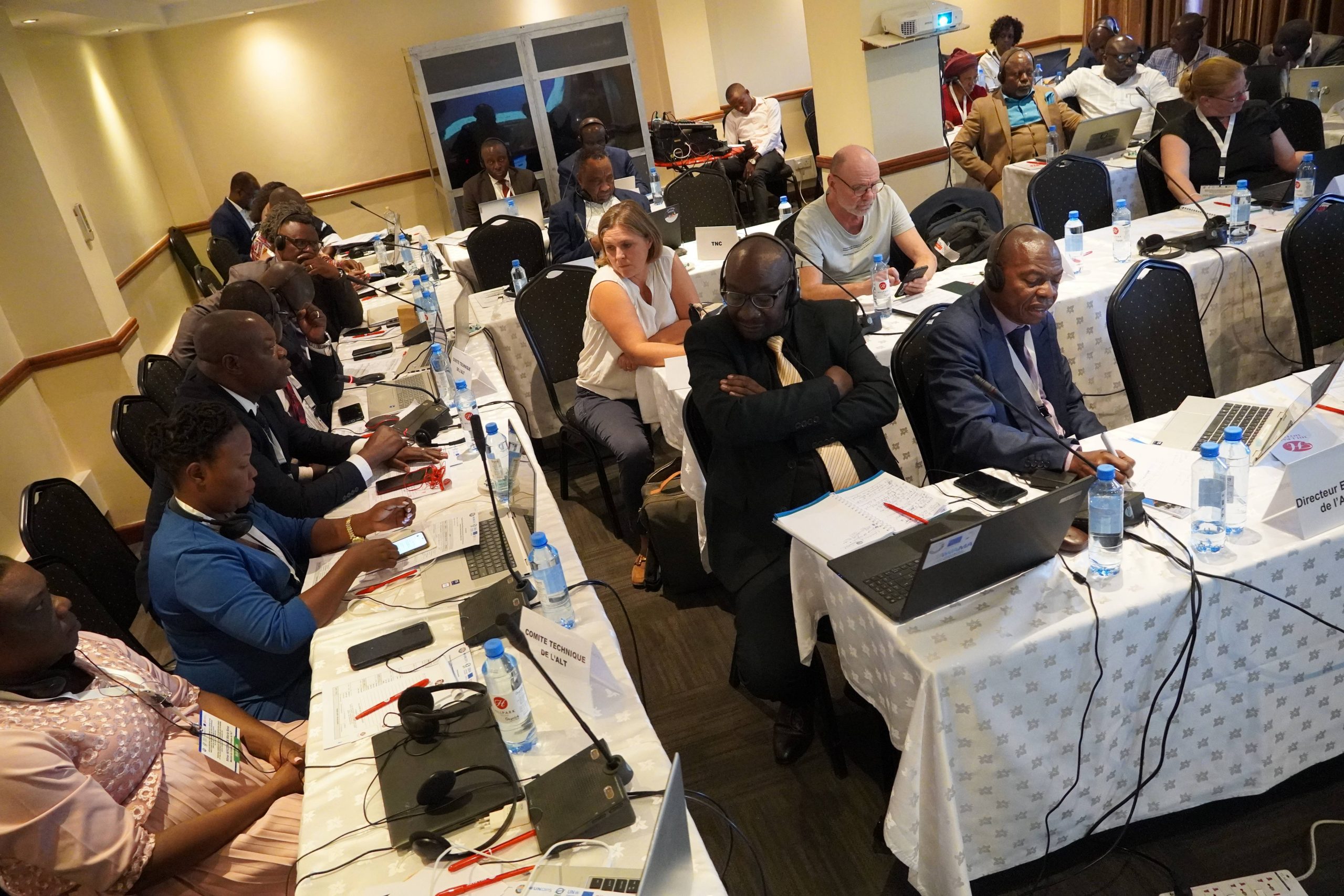
The Secretariat of the Lake Tanganyika Authority (SALT), in collaboration with the United Nations Office for Project Services (UNOPS) and the Deutsche Gesellschaft für Internationale Zusammenarbeit (GIZ), organized the regional workshop to launch the review and update of the Lake Tanganyika Authority’s Strategic Action Programme (SAP). The workshop was held from 26 to 29 January 2026 in Nairobi, Kenya, and brought together the Chairs of the LTA Management Committee, members of the technical committees, representatives of relevant government institutions from the riparian States, civil society organizations and NGOs, as well as technical and financial partners, including GIZ, ENABEL and UNOPS, the LTA Secretariat, and the GOPA consulting team.
The main objective of the workshop was to initiate the process of reviewing and updating the SAP adopted in 2012 in order to enhance its relevance and effectiveness. The specific objectives were to assess the relevance of the 2012 SAP; to compile, synthesize, and integrate recent scientific data, research findings, and socio-economic information; to update the context so as to better reflect the current status of biodiversity in the Lake Tanganyika basin and the livelihoods that depend on it; and to align the SAP with recent regional and international policy commitments and institutional frameworks related to the sustainable management of the lake.
During the opening ceremony, the LTA Regional Chair and the partners emphasized the strategic importance of the SAP as a fundamental guiding document for the planning and implementation of actions aimed at protecting and sustainably managing the Lake Tanganyika ecosystem. The Executive Director of the LTA recalled that the SAP serves as a true strategic compass for the Secretariat and must therefore evolve in line with priorities and on-the-ground realities.
The technical sessions provided an overview of the progress made in implementing the 2012 SAP. LTA Directors presented the achievements, key results, and challenges encountered in the implementation of the various pillars. The discussions highlighted the lack of reliable quantitative data to support decision-making and the need to strengthen the monitoring and evaluation framework, particularly through the definition of SMART objectives and measurable indicators.
The GOPA consultants presented key analytical tools and results, including the evaluation matrix, stakeholder mapping, and indicator analysis. Group work sessions were then conducted to further assess the SAP, followed by plenary presentations and discussions aimed at harmonizing conclusions and formulating common recommendations.
In conclusion, the consultants presented a draft revised SAP, developed on the basis of participants’ contributions and the evaluation exercises of the initial SAP. Participants recommended incorporating all observations made and including new pillars and cross-cutting themes to further strengthen the protection, conservation, and sustainable management of the Lake Tanganyika ecosystem.